When Michael Jordan entered the NBA, he insisted on a “Love of the Game” clause in his contract with the Chicago Bulls. At the time, most professional contracts prohibited players from playing pickup basketball outside official games. The risk of injury was considered too high. Jordan refused that restriction. His clause allowed him to play basketball anywhere, anytime—not to train, not to win, but because he loved to play.
That clause mattered because it protected something fragile: an activity pursued without guarantee, without optimization, without outcome. Basketball was an end in itself.
Most of us do not live that way.
We’re permitted to do things only insofar as they produce results: productivity, validation, success, approval. Even love is treated well when it performs. Meaning is allowed to linger only when it can defend its place. Over time we lose touch with what it feels like to engage with life for its own sake. We confuse motion with purpose. We confuse achievement with fulfillment.
“Know thyself.”
That injunction, attributed to Socrates, isn’t a comforting phrase. It can be unsettling. To know oneself isn’t to affirm an identity; it’s to interrogate it. It’s to ask whether the life one is living is actually one’s own, or inherited, conditioned, rehearsed.
In 1758, Carl Linnaeus offered a scientific answer to the question of who we are. He named our species Homo sapiens—the wise human. The name is so familiar we rarely hear its implication. Wisdom, unlike intelligence, isn’t automatic. It has to be cultivated, often through discomfort, loss, and revision.
In more recent years, we’ve added another name: Homo narrans. The storytelling human. We assemble meaning after the fact. We explain ourselves to ourselves through narrative. Those narratives quietly set the terms of our ambition and our fear: what we chase, what we avoid, what we believe will finally make us whole.
What if many of the stories we’ve inherited, about happiness, success, purpose, even identity, don’t match the lives they generate? What if unhappiness isn’t a personal defect, but a predictable outcome of scripts that were never examined?
My view of life did not come from philosophy alone. It came from loss, illness, and years of standing beside hospital beds as lives changed in an instant. As a critical care physician spending much of my time in intensive care units, I’ve witnessed both the fragility and brilliance of life. I’ve sat with families whose entire world changed in a breath. I’ve watched people let go with a grace that leaves an indelible mark. I’ve walked beside people at their most vulnerable.
I’ve seen suffering that defies logic. I’ve also seen small acts like an apology, a hand held, or a final conversation carry more weight than any résumé line ever could. That contrast, the ache and the awe, has shaped how I think about living.
That proximity to life and death has been an unforgiving teacher. It rearranges priorities. It strips away a lot of what we thought mattered, leaving what remains: reality without comforting ornamentation.
We often believe we’re changing, when in truth we’re only rearranging. Real change isn’t cosmetic. It’s structural. It reaches deep down into how we interpret, how we choose, what we tolerate, what we keep returning to.
Somewhere along the way, our ideas of happiness became contaminated. We internalized a version of success that wasn’t fully ours. It was louder, shinier, more marketable and it promised a payoff that kept getting postponed. Eventually it confused us. We kept upgrading the surface while the underlying hunger stayed the same.
So I began to ask simple questions. What do I want? What do I need? What am I seeking? And where do these desires come from? Are they truly mine, or were they planted by a culture that benefits from my uncertainty, my dissatisfaction, my sense of never-enough?
We live in a world that trades in attention. It spots insecurities quickly, feeds them, and offers products, status, and identities as relief. It isn’t surprising that so many people feel restless even when life is fine on paper.
Change is hard. Habit is sticky. Knowing is cheap. Doing is costly. We fall back into what’s familiar even when it no longer serves us because the mind confuses familiarity with safety. Most of us have had the experience of deciding, late at night, that tomorrow will be different, then waking up inside the same day again.
In the last few years, many of our routines were disrupted. People were confined to their homes, their devices, their relationships, their thoughts. Some ties strengthened; others frayed. The illusion of certainty took on cracks. Even now, the world has a background hum of news, conflict, and instability that makes it harder to feel settled. A lot of people move through their days half-awake, managing and coping, rarely arriving.
This isn’t only personal. It’s systemic. The external world puts pressure on the inner world, and the inner world absorbs it until it starts to feel like an identity.
So it’s worth asking, without drama: what is happening to us?
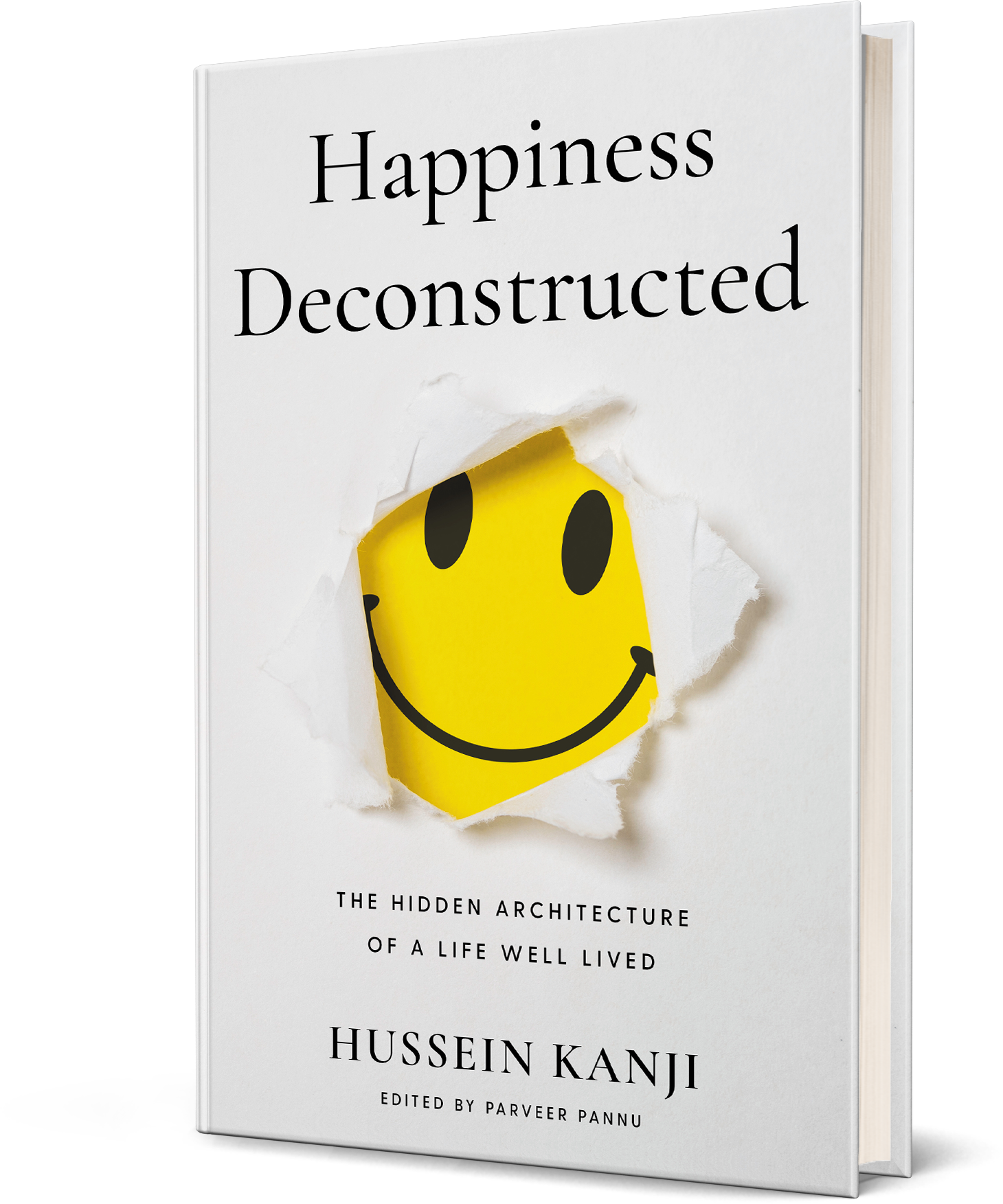
Before we begin, it may help to know what this book is trying to do. It is not a program for becoming happier, more productive, or more impressive. It is an attempt to understand why so many capable people feel quietly depleted, even when their lives look successful from the outside.
The chapters that follow move through four stages. First, we examine the conditions that stabilize unhappiness in modern life. Then we look at what cannot be controlled and how acceptance changes our relationship to it. From there the focus shifts to capacities that make life more livable: attention, vulnerability, patience, perspective, and perseverance. Finally, we return to the reality that none of this unfolds in a straight line. The aim is modest but serious: to help you distinguish between pain that belongs to being human and the unnecessary suffering created by the stories we tell about it.